WORK BETTER
A workspace isn’t just about how it looks. It’s about how it works
SETUPS TAKE TIME
A workspace doesn’t always come together overnight. Mine has been evolving for several years, one change at a time. Don’t feel like you have to create everything at once. Start with what matters most to you, learn what works, and let your setup evolve along the way.
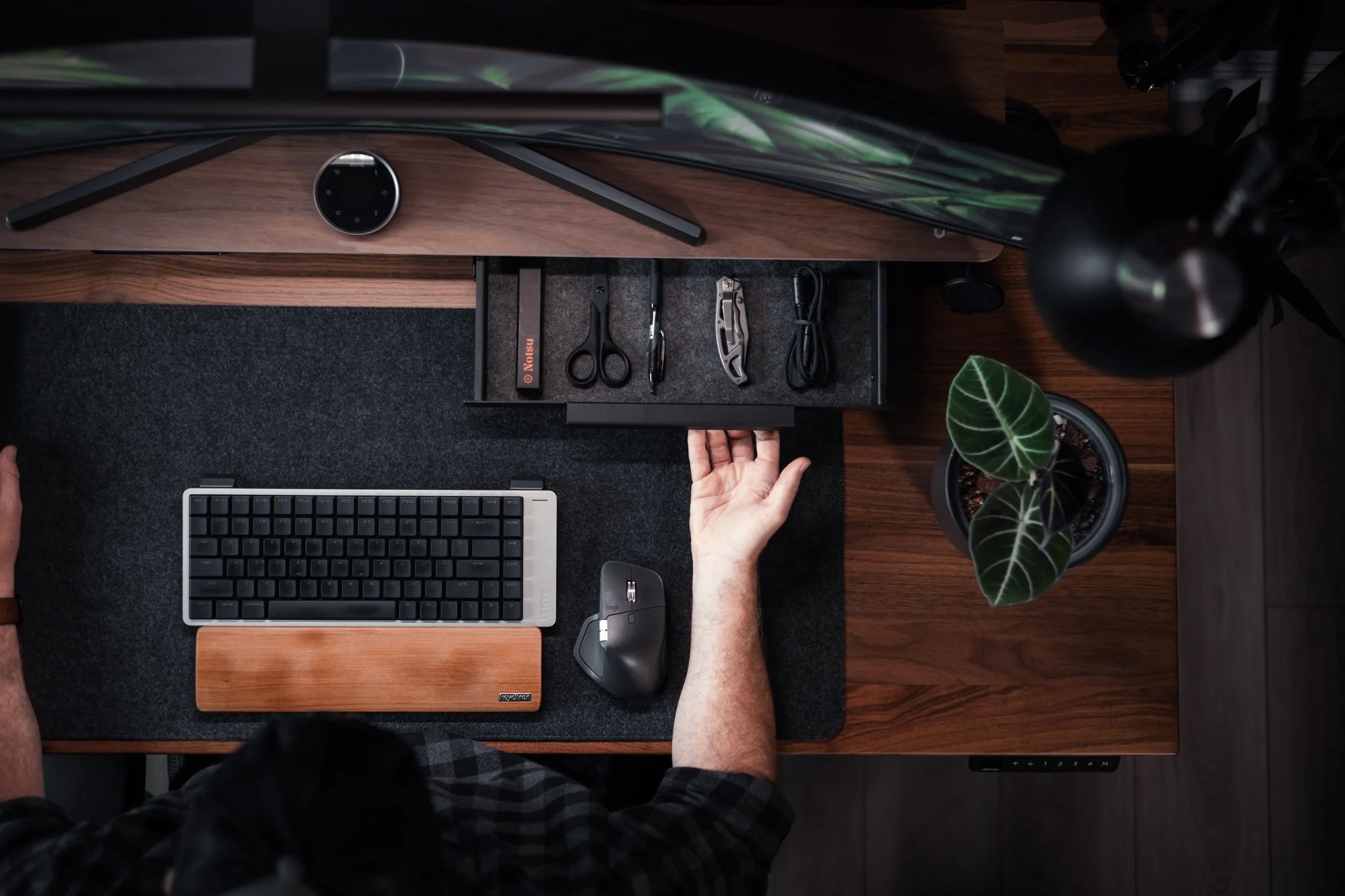
Think about the things you actually use throughout your workday and give them a dedicated place nearby. Keeping something accessible doesn’t mean it needs to live on top of your desk. A clear workspace can reduce distractions while thoughtful storage keeps everything you need close at hand. For me, that means only keeping items on my desk that I need more than 90% of the time. Things I use regularly, but not constantly, stay off the main work surface while still being within arm’s reach—often stored on or underneath my desk shelf.
KEEP WHAT YOU NEED CLOSE — WITHOUT CREATING CLUTTER.
Pay attention to the little things that repeatedly slow you down or interrupt what you’re doing. Searching for a charger, moving equipment out of the way, reconnecting devices, or constantly rearranging your desk may seem insignificant, but those interruptions add up. For me, that means looking at the tasks I repeat most often and finding ways to make them require fewer steps. If I use something several times a day, I want my setup to make that process as effortless as possible.
REMOVE FRICTION FROM YOUR ROUTINE.
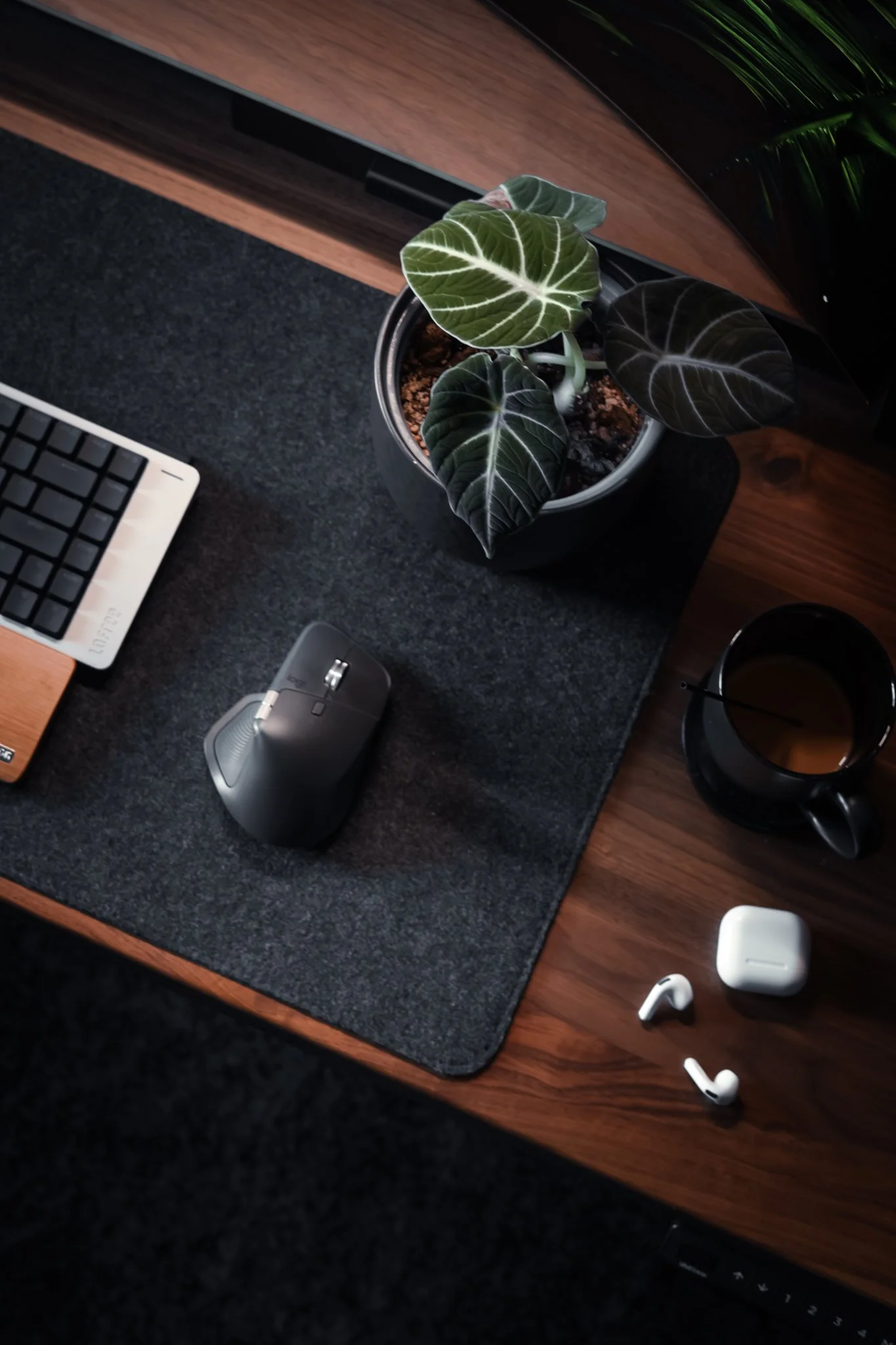
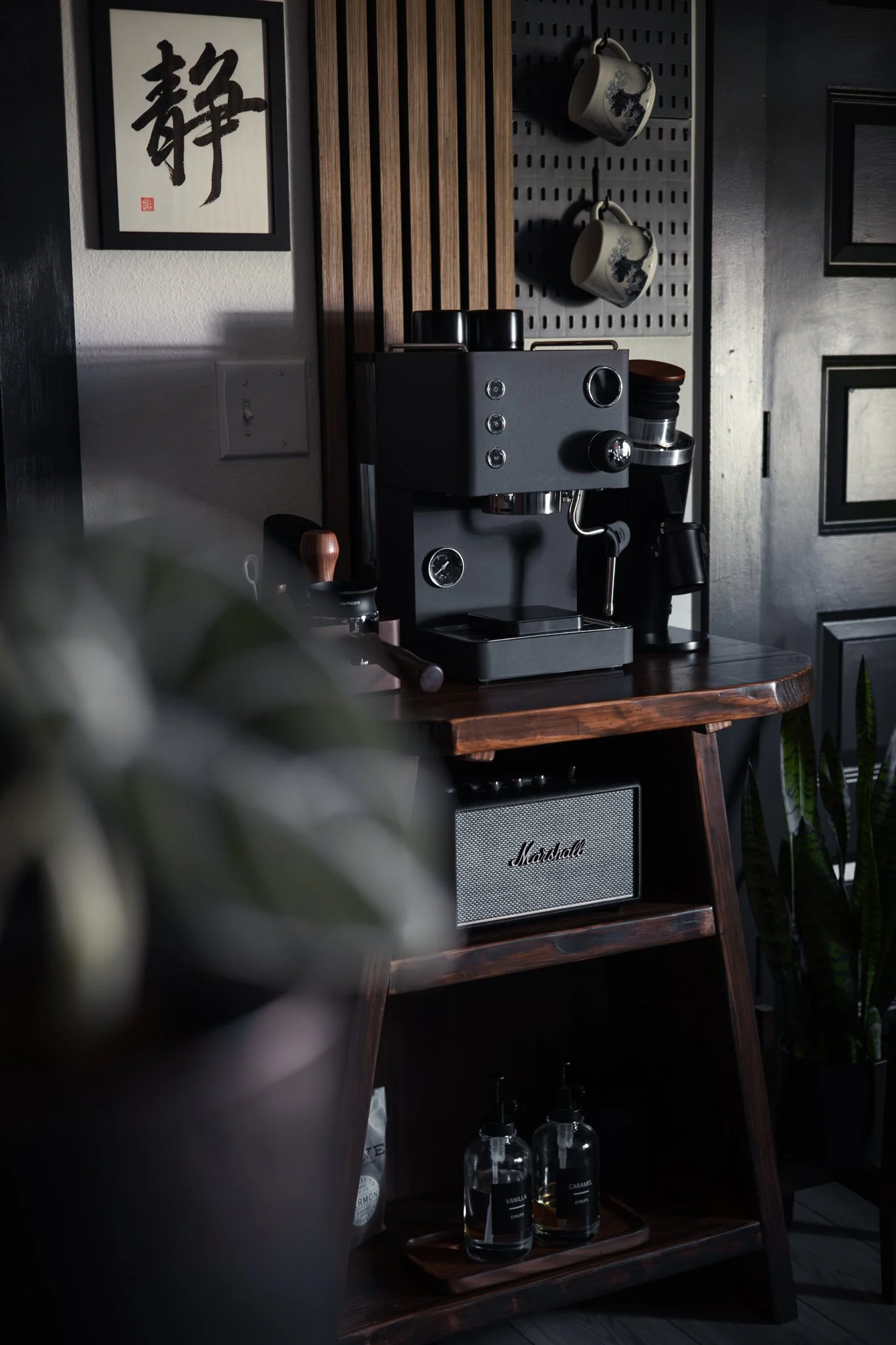
A workspace doesn’t have to be made up entirely of things that serve a practical purpose. The elements you simply enjoy can be just as important in creating a room you actually want to spend time in. Artwork, plants, materials, collections, or objects that reflect your interests can turn a functional workspace into something that feels distinctly yours. For me, that means incorporating Japanese-inspired décor, natural wood, plants, and even my coffee station. They may not be traditional workspace essentials, but they’re a huge part of what makes the room feel like my own.
MAKE THE SPACE PERSONAL.
Lighting can completely change the atmosphere of a workspace, especially when you spend hours there every day. Rather than relying on a single overhead light, layering different sources of light can make a room feel warmer and more comfortable while still giving you the light you need to work. For me, that means using warm, indirect lighting throughout the office and taking advantage of natural light during the day. I want the room to be functional when I’m working, but I also want it to feel calm and inviting when I’m spending time here.
PAY ATTENTION TO LIGHTING.